
As Bidfood celebrates 30 years in Australian foodservice, we sat down with some of our customers who have shared the journey with us to uncover the secrets behind their success, hear about their experiences over the decades and meet the people who have helped shape foodservice in Australia.
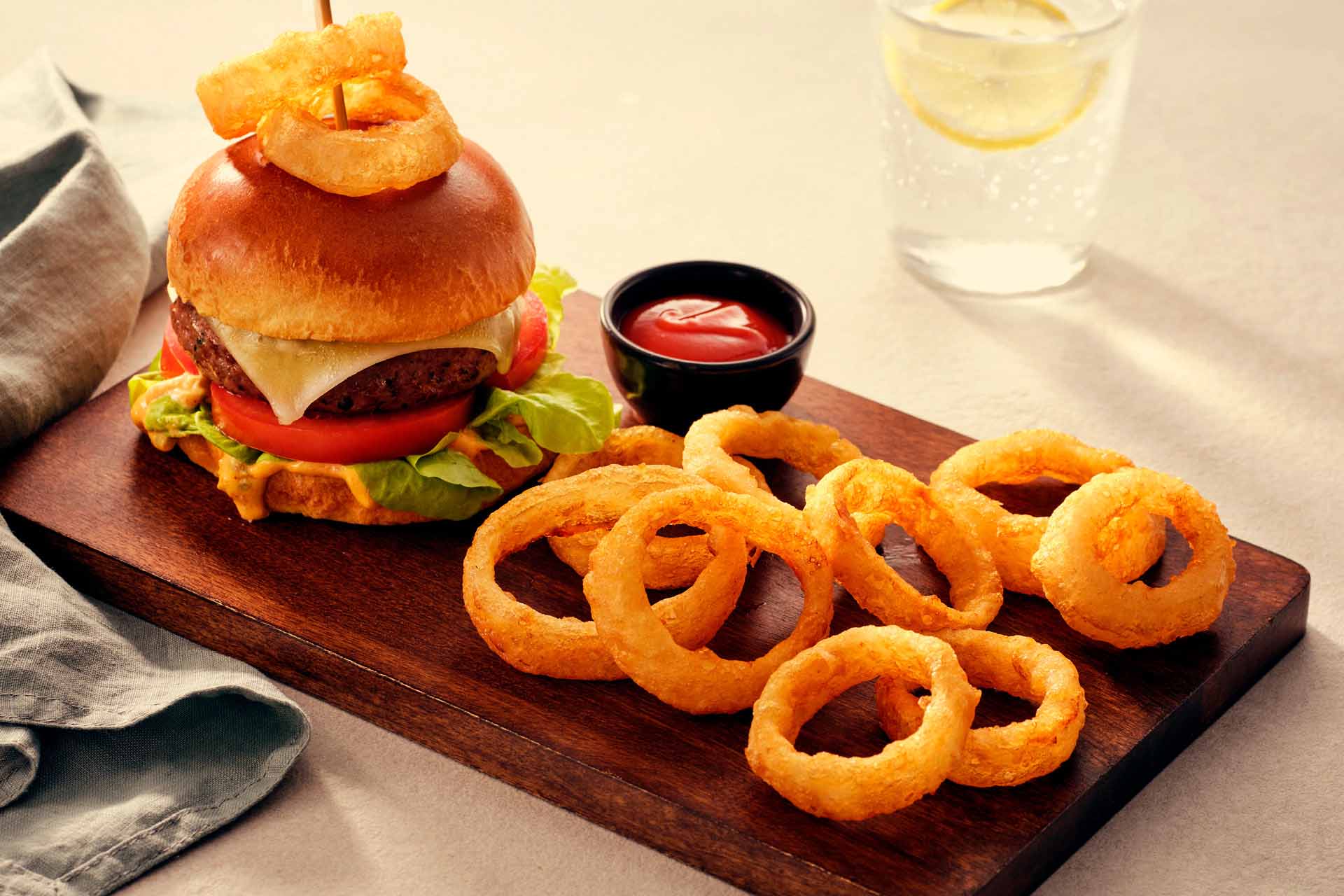
Of all the changes in the way Australians eat over the past 30 years, one trend has stuck around – and arguably had the biggest impact – the rise of the gourmet hamburger. Once just a family treat at a fast-food chain or a greasy staple from the local fish and chip shop, the humble burger has been reimagined into a premium dining experience.
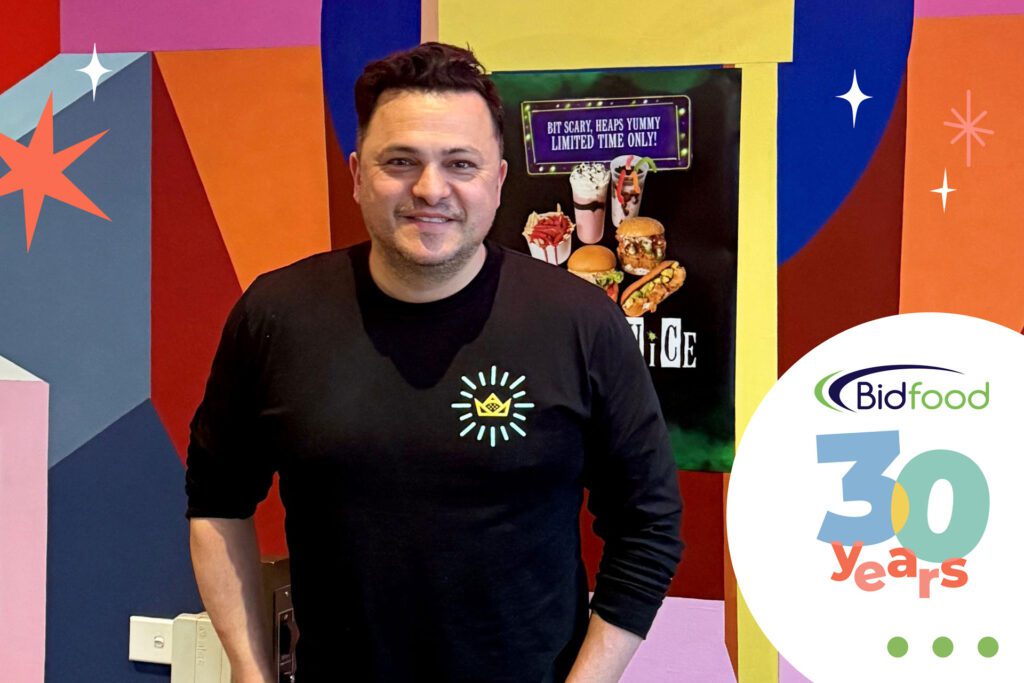
We spoke with Dani Zeini, the force behind Royal Stacks, about why Australians have embraced the gourmet burger and the philosophies that have taken him from flipping a single burger to running 20 stores and 100 staff.
Dani Zeini’s love affair and passion for hamburgers came about after a trip to America in 2009 with his wife. “My first real contact with quality burgers was in the States around 2009 – 2010. We tried them across the country and instantly fell in love, not just with the product, but the service,” he recalls.
Dani was struck by how different American burger culture felt. The food was great, but it was the genuine, welcoming service that truly left its mark.
“Hospitality that was genuinely friendly and warm. It didn’t matter if you were in trackies or a suit, you got treated the same. I appreciated that. Coming from a fine-dining background, sometimes you don’t get that quality service in nice restaurants. But in the States, everywhere we went was welcoming, especially in burger joints.
“I felt like I wanted to bring that back to Australia.”
Returning with this elixir, Dani began a process of trial and error, crafting burgers at his then restaurant, Dandenong Pavilion. “We started experimenting with burgers. People loved it. That was the birth of Royal Stacks.”
Dani, who describes himself as a jack-of-all-trades, is the founding director and creator of the incredibly popular burger chain, Royal Stacks. “I started Royal Stacks from the ground up. From branding, the first store, design. Everything. And we’ll be at around 20 stores by the end of the year.”
As to the secret of his success, Dani believes a great burger comes down to two things – the product itself and the service. “That’s been the strength of our success – from Dandenong Pavilion through to Royal Stacks,” he says. “A great burger starts with great service.”
Dani leads from the front, setting the tone for his team. “I want staff to treat guests the way I treat them. My leadership style is about absorbing pressure, keeping staff relaxed, creating happy spaces.”
It’s a philosophy that extends to how Royal Stacks builds its venues, social media presence and community. “In any relationship you can tell when someone’s putting in effort. That’s what we do through our service, our food and the spaces we create. People can feel it.”
When it comes to what makes a burger taste great, that’s driven by a bit more science. And the first key is the fat/sugar ratio. From there, it’s all about the quality of the ingredients.
“Our beef is pasture-fed, no hormones, no antibiotics, no GMOs. It takes about two years to get that protein onto your plate. You can feel the difference.
“The bread is massive too. Bread is part of every culture’s celebrations – so we bake ours fresh daily. A small local baker delivers every day. No added sugars, no oils, no long-life preservatives. It’s just classic techniques. You can’t always pinpoint it, but you feel it.”
As to the love affair Australians have with the burger and the culture shift that has seen branded burger restaurants and chains become a mainstay of the hospitality landscape, Dani believes this comes down to a bit of nostalgia, changing Australian palates and a little bit of economics.
When asked about burgers from his childhood, there was one standout. “For me, it was always McDonald’s. Playgrounds, Happy Meals, the marketing – incredible. That was the treat. They paved the way. Everyone’s got those memories. Burgers are nostalgia-heavy. They take us back to childhood.”
Another big influence on both Dani and the burger revolution in Australia was the old fish-and-chip shop burgers. “Those cooks were real artists. Some lived above the shop. Whatever they cooked you, it had their heart and soul in it. That was real quality. Royal Stacks is a continuation of that legacy.”
And while the burger revolution in Australia was as much a field of dreams, the demand from customers for better quality food was also a driving factor in the supply of new flavours.
“So where once McDonald’s was the standard, now we’ve been opened up to grass-fed farm beef with no trim. We’ve had access to great food, especially in Melbourne – thanks to people like the European migrants and the café culture. Palates have changed. When I grew up, steak was from the supermarket – thin, no fat, burnt. Now my kids know what Wagyu is. My 12-year-old son asks for medium rare. That’s where the culture is. Once you’ve had that, you can’t go back.”
When it comes to the economics, Dani believes burgers are still a relatively low-cost product, especially for the quality. “Still, for around 25 bucks you can get a really good burger, fries and a drink. That’s value. Compare it to anything else. Parmas $35 now. Fish and chips $40. Pastas $30. Pizzas $30. A proper restaurant meal is $50– – $60 minimum. Burgers are still a value proposition.”
Above all, though, Dani reckons the secret to the success of burgers in Australia is happiness. “I’ve never seen anyone unhappy eating a burger. Every chemical neuron in your brain lights up. You wash it down with a Coke and you’re in joy.”
As to what’s next for Dani and Royal Stacks, it’s all about continuing the legacy of great service and delicious hamburgers, while continuing to stay fresh. “As you grow, it’s important to think about the life cycle of your core customer. One way to do that is to constantly come up with innovative ideas – nice, interesting flavours, eye-catching stuff, bold stuff, sometimes just easy stuff. You’ve got to push the envelope and provide new experiences for existing customers while also trying to catch the eye of new ones.”