
Australian lamb has always held a special place on menus, but in a fast-changing foodservice landscape, chefs are finding new ways to celebrate it. Sam Burke, Corporate Executive Chef at Meat & Livestock Australia (MLA), shares why cuts like the Naturalaz sous vide lamb shoulder rack are helping lamb make a powerful return.
When asked to think about lamb, customers often picture Sunday roasts dripping in mint sauce and slathered with gravy. Late-night souvlakis, rich curries and slow braises and stews also come to mind. And while these mainstays are incredibly popular, research suggests that post-COVID, lamb has slipped from many menus as a centre-of-plate option.
Yet the same research from MLA also shows the love for lamb itself hasn’t faded. Older customers remain loyal, while many ethnicities and cultures still regard lamb as their first and premium choice.
“That’s the beauty of Australian lamb,” says Sam Burke, Corporate Executive Chef for MLA. “It’s such a versatile protein, celebrated by so many cultures. Don’t just think of roasts and BBQ chops – lamb pairs beautifully with a wide range of multicultural cuisines. Australia is a mixing pot of those cultures, so it makes sense to present lamb in interesting ways.”
For chefs and operators, the opportunity now lies in bringing exciting centre-of-plate cuts of lamb back to the menu.
Lamb’s comeback – why innovation is winning back chefs
Value-added formats like sous vide and full-carcass utilisation are helping operators bring lamb back to menus. “Traditionally, fine-dining restaurants and hotels have focused on the classic 250–300g centre-of-plate portion paired with vegetables and sides. And this is great, but we’re also now seeing a shift toward shared centrepieces,” says Sam. He believes that lamb naturally celebrates itself in this way – especially with sharing plates and the non-traditional rack and loin cuts.
“You can take a forequarter rack, slice between the intercostals, and spread it out as a share plate in the middle of the table with beautiful sides to accompany it. The great thing about this style is that diners can take as much or as little as they like. Some diners might prefer 150 grams, others 300.”
There is also a growing opportunity for lamb in casual dining and quick-service restaurants (QSR). “It’s a big market, and products like Naturalaz sous vide lamb make it possible to deliver high-quality meals quickly and consistently.”
Naturalaz sous vide lamb racks – premium lamb made practical
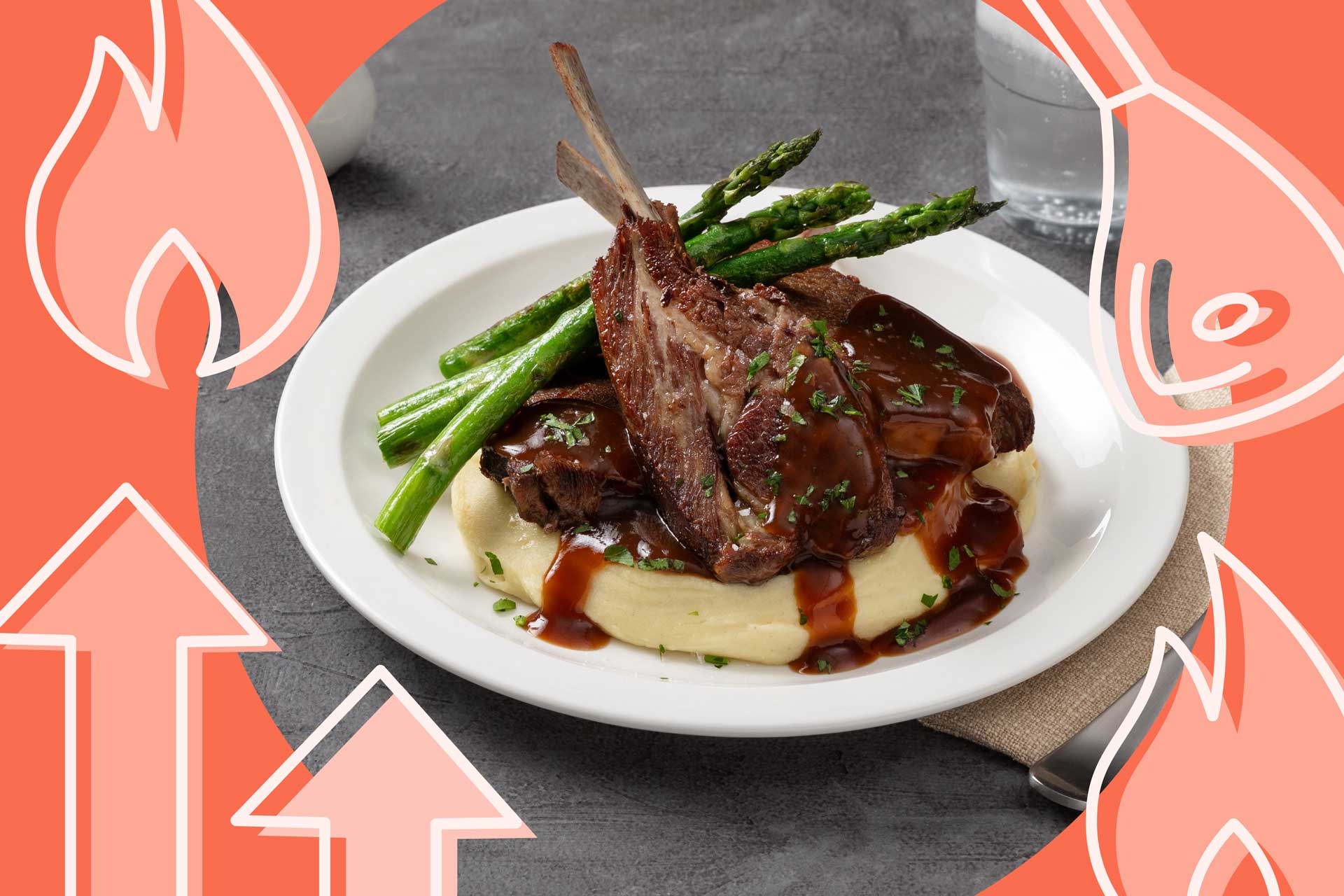
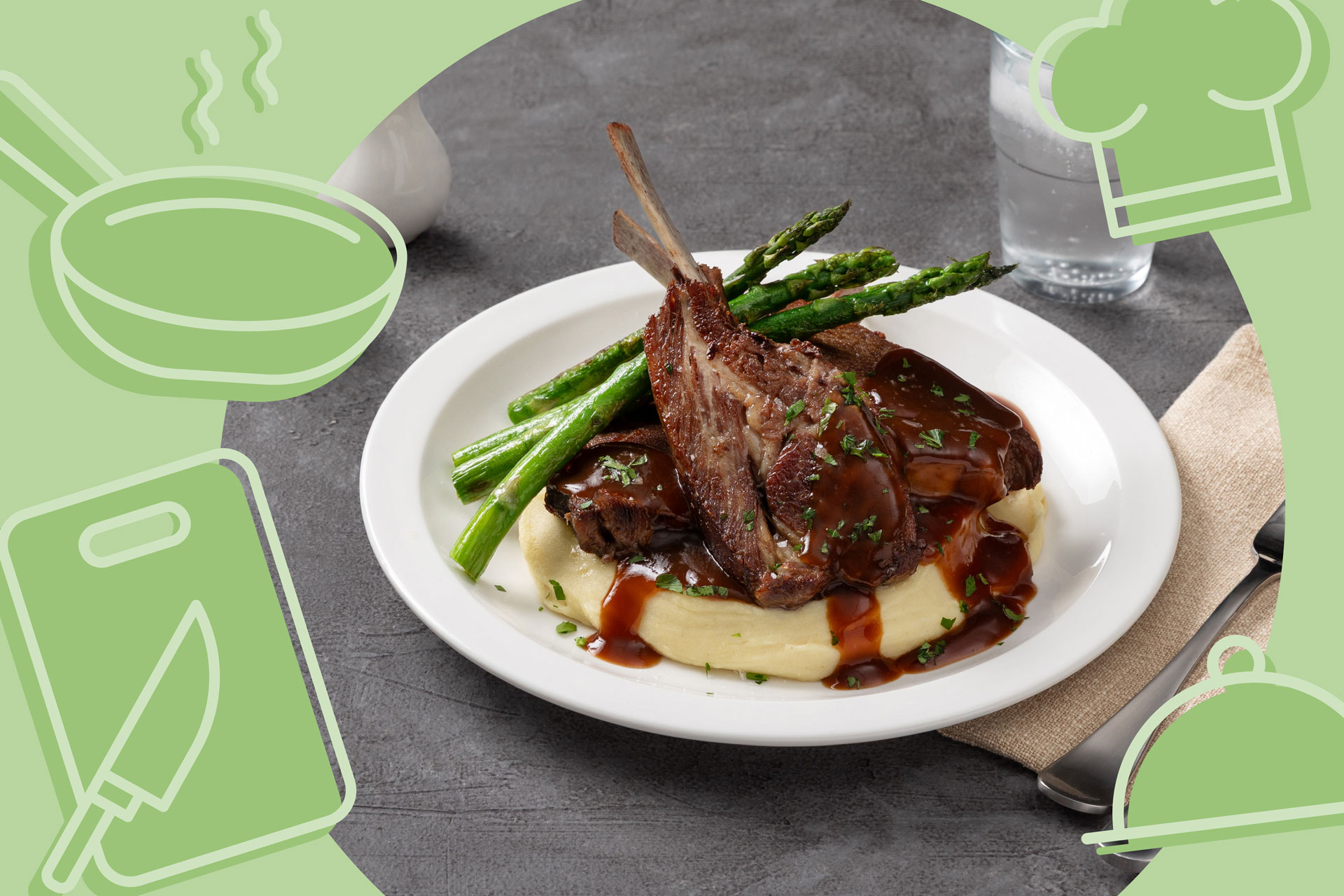
Naturalaz sous vide 4 Point Lamb Rack (224323) is a forequarter cut that has been slow-cooked for 15 hours at 71°C. Prime Victorian lamb, pre-frenched with the chine removed, it’s ready to defrost, finish and serve.
“It’s a brilliant product,” says Tom Cooper, Bidfood’s National Meat Expert. “You get that deep lamb flavour and tenderness from the forequarter, but without the hours of prep and cooking. There’s also no shrinkage, trimming or yield loss – just consistency and confidence at service.”
For pubs and clubs, the rack offers great value and consistent sizing that’s easy to finish on the grill. In aged-care kitchens, the soft texture and high protein content make it ideal for balanced, easy-to-portion meals. And for hotels or bistros, it saves crucial time during busy service while still delivering premium presentation and flavour.
“That’s the real beauty of sous vide,” Tom adds. “It gives chefs the flexibility to scale, serve and create – whether it’s a plated function meal, a bistro special or a fine-dining cutlet.”
Tackling labour and consistency challenges
Value-added and sous vide products have become game-changers for chefs, giving them precious time back in their day. As Sam Burke explains, slow-braising a lamb shoulder or forequarter “takes three and a half to four hours – and not every kitchen has multiple combi ovens or the space to run long cooks. Many are small kitchens with just one oven, a flat grill and a fryer.”
Sam believes this time and space will allow chefs to focus on other aspects of the dish. “With sous vide, that long process is already done. Chefs can spend more time on the details – beautiful braised or pickled vegetables, flatbreads, whatever complements that hero cut.”
Sous vide also streamlines service. Naturalaz racks can be kept hot and ready in a bain-marie or hot box without compromising quality, allowing chefs to plate faster and serve more consistently – even during the rush. “It’s about working smarter, not harder – delivering great meals faster without cutting corners,” Sam adds.
A sustainable approach – full carcass utilisation
MLA research has also identified that sustainability is a factor when it comes to purchasing decisions around red meat. And this is why Sam loves the Naturalaz lamb shoulder racks.
“It’s not always about the prime cuts. The rack and loin only make up around eight per cent of the carcass. As chefs, we’ve got a responsibility to make use of the whole animal – the forequarter, hindquarter and ribs underneath the rack. This is where real sustainability comes in, making sure every bit of the product is showcased beautifully on the menu. When you look at the forequarter and shoulder – where the Naturalaz racks come from – you’re using parts beyond the traditional rack and loin.”
Naturalaz sous vide lamb rack – an opportunity for chefs
With the Naturalaz sous vide lamb rack, the opportunity to bring lamb back as a centre-of-plate showstopper is within reach – combining consistency, value and creativity.
Sam believes it’s an innovative product that presents lamb in a new and exciting way, addressing some of the major challenges facing commercial kitchens and chefs – a clever, modern take on a classic Australian ingredient that fits perfectly into today’s foodservice landscape.
“It takes the shoulder – a cut traditionally used for chops or slow braises – and presents it in a completely new way. And why couldn’t shoulder be a rack? It looks great on the plate, serves well in any portion size, and delivers a consistent eating experience every time.”